


TRADITIONAL GREEK DISHES AND WINE PAIRING!
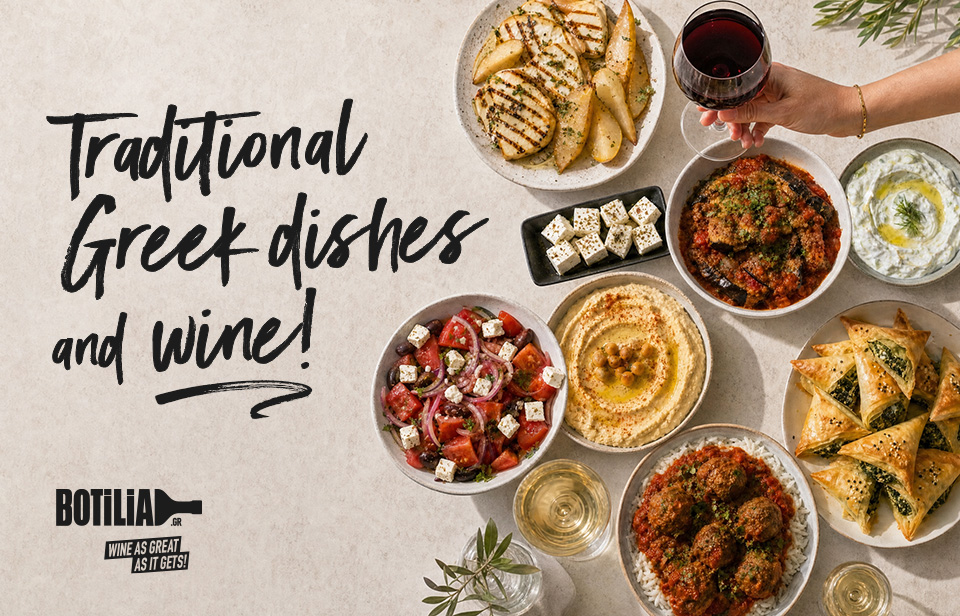
If there is one thing during the summer months that makes everyone (locals and tourists alike) fall even deeper in love with Greece, it is undoubtedly Greek cuisine which, when paired with the right wine, takes the whole experience to a next level. Gemista (stuffed vegetables), moussaka, Greek salad, shrimp pasta, souvlaki, and spreads like tzatziki hold a dominant spot on the list of "what to eat in Greece this summer." Yet beyond foreign visitors, Greek cuisine is a summer ritual for us locals too, as we will always be searching for the traditional mezedes of the island and the mountain village, the perfect Greek salad, and the ultimate shrimp pasta that smells like the sea!
So, what are the best wine pairings for Greek dishes?
Naturally, we are here to tell you all the ideal matches between wine and Greek cuisine, and at this point, let us remind you that when it comes to tastings, we are total pros!
Which wine pairs with Moussaka?
We went straight to the heavy hitters, but it’s best to know these things early on! Moussaka strikes right at the heart of Greek home cooking. Layers of eggplant, minced meat, potatoes, and a rich, sinful béchamel sauce give it a deep flavor and aromas that wake up memories! It demands wines with structure, personality, and desperately asks for help to cut through its richness.
Try it with: Naoussa from Domaine Diamantakos. The crisp acidity of Xinomavro will cleanse the palate from the dense béchamel, while the aromas of sun-dried tomato, spices, and sour cherry will embrace the minced beef and eggplants, because this relationship was meant to be!
Alternatively: Pair it with Nemea Aivalis. The velvety Agiorgitiko matches rich tomato sauces and warm spices perfectly.
Note: Pastitsio as well as beef stewed in tomato sauce with thick pasta fit into this exact same basket!
Which wine pairs with Gemista?
If we are talking about Greek summer comfort food, we are talking strictly about gemista. Whether in their classic or modern form since some contemporary households now prepare them in the quicker, less troublesome way in a deep skillet without an oven, or even as a "salad." Tomatoes, peppers, rice, mint, parsley, spring onion, and a whole carafe of olive oil! Because proper gemista should be practically swimming in olive oil!
Try it with: Amayna Agapes Solera 1/2 - Viña Garcés Silva Vineyards. A heavenly, almost mythical combination that leaves no room for doubt because it brings a massive twist. Amayna is a Chilean Sauvignon Blanc aged in a solera system inside oak barrels. Its acidity, along with notes of roasted pepper, tropical fruits, and herbs, locks with mathematical precision onto the stuffed peppers, mint, and olive oil. The necessary side piece of feta cheese takes the gastronomic experience to another level.
Alternatively: Rose de Haritatos is the rosé answer to this question, as Mavrodaphne combines spicy pepper notes and acidity that perfectly balance the dish’s richness and herbs, while simultaneously highlighting the sweet, concentrated taste of baked tomato.
Note: The exact same logic applies to pairs with oil-based green beans (fasolakia) or giant beans (gigantes), but here you can also go with a Xinomavro rosé to enhance the tomato element. Try Xinomavro Rosé from Arktos Elevation Vineyards.
Which wine pairs with Greek Salad (Choriatiki)?
Greek salad is far from being just a side dish. It comfortably stands as a main course if made properly and generously! Fresh tomatoes or cherry tomatoes, crunchy cucumber, bell pepper, onion, oregano, capers, plenty of olive oil, and a thick slice of feta cheese (preferably barrel-aged feta) create a dish that smells like Greece and summer. In the village or on the island, the aromas and flavors skyrocket, and you truly need nothing else for a delightful feast. Well, maybe 1.5 kg of bread… and of course, the right wine! Even though we are talking about a salad, finding the right wine for a Greek salad is no easy task!
The choices here are endless, ranging from light and aromatic wines to more robust ones with high acidity. It all depends on which bite you take! The wine here needs to handle three main elements: the high acidity of the tomato, the salty and rich feta, and the intense character of the informal vinaigrette made of oil, vinegar, and oregano.
Try it with: Apla White by Oenops, which is very expressive, refreshing, with citrus notes and crispness. The high freshness of Assyrtiko balances the tomato’s acidity, while the aromatic character of Malagousia pairs like a dream with fresh pepper, cucumber, and oregano.
Alternatively: Atlantis White from Estate Argyros has intense, sharp acidity, while the minerality of Assyrtiko cuts through the richness of the feta and olive oil, pairing flawlessly with olives and capers.
Another option: Gaia S from Gaia Wines, on the other hand, features aromas of pepper and grass from Sauvignon Blanc that reflect the green vegetables and oregano perfectly, while Assyrtiko does its job to deliver the refreshing harmony needed for the dish's richness and acidity.
Which wine pairs with Fried Little Fish?
Dining by the waves, smelling the sea, is a 100% Greek summer scene, and having a meal with the sea on your plate and small fried fish for lunch is another! The dish has richness from frying, a crunchy crust, a salty sea flavor, and the lemon we usually squeeze over them.
Try it with: Loureiro Vinho Verde Ponte de Lima. When you think of fried sand smelt (atherina) and anchovies (gavros), your mind should automatically go to Loureiro Vinho Verde Ponte de Lima. Why? Because it cuts through the oiliness of the fry, while the ocean breeze of the Atlantic embraces the natural saltiness of the fish.
Alternatively: Savatiano Fine Lees from Nikolou Winery has the body required from lees aging to stand up against the crunchy crust and oil without getting lost, while aromas of lemon cream, citron, and bitter orange peel offer a unique gastronomic experience!
The next two Greek dishes are "pillars" of Greek cuisine and you must know how to pair them properly, so I will be brief and concise.
Which wine pairs with Tzatziki?
Tzatziki is one of the hardest Greek appetizers to pair with wine due to the intense sharpness of garlic, along with the acidity and fat of yogurt a combination that "kills" most wines. You, however, will pair it with a Retsina that has high acidity, a strong botanical character, or even bubbles! Yes, yes, you read that right.
Try it with: Pitys Ritinitis from Troupis Winery and Botanic Sparkling Brut from Nikolou Winery to see how true this is!
Which wine pairs with Gyros and Souvlaki?
To me, gyros is always pork everything else I consider a compromise. It is rich, fatty, well-seasoned, with crunchy elements (especially those delicious, crispy charred edges), and is often accompanied by tzatziki, tomato, and onion. Some prefer yogurt. Well, I disagree!
Try it with: Kaleidoscope Kaapzicht, which has crisp acidity and soft tannins that balance the richness of pork gyros, while its spicy aromas of spices and smoke blend seamlessly with the grilling and seasonings. Dare to chill it slightly to 12-14°C!
Christina Tsogka
Botilia's Wine Specialist