


HOW TO STORE YOUR WINES AT HOME!
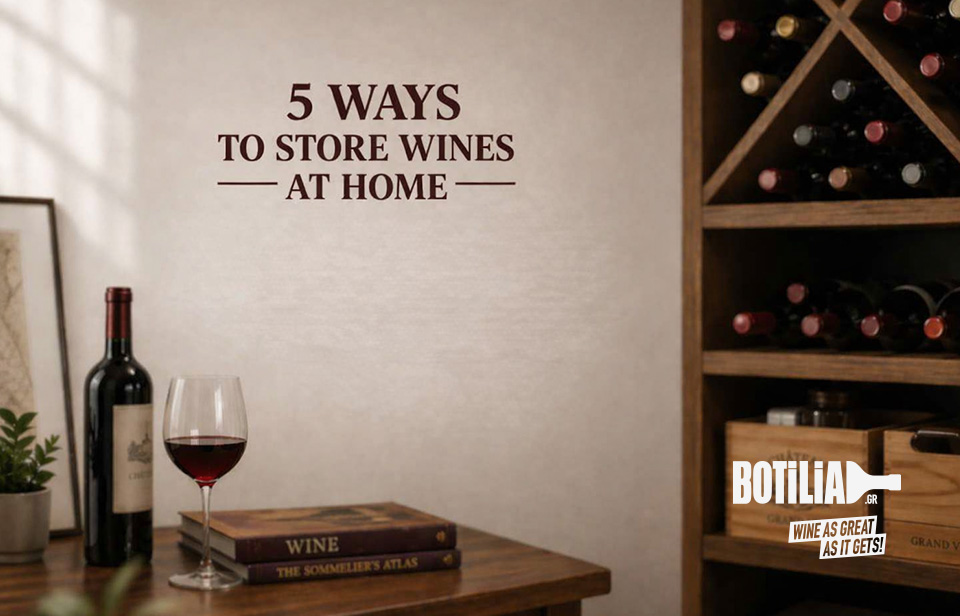
It may have happened to you: you buy a fine wine that we’ve recommended, and you leave it on the kitchen counter or a shelf, assuming it will stay just as 'alive' and enjoyable until the moment you open it. However, the truth is that if you don't store it in the right spot, it can lose its 'sparkle'! To be precise, it can lose its aromas and flavor, even if you don't intend to keep it for long, but only for a few weeks or even days!
To properly 'care' for your wines until that moment arrives, you can take advantage of specific spots in your home, without necessarily needing a large, dark cellar or a wine cooler. The key secret is to protect them from heat and sunlight, which are its two main enemies. Below, I list 5 simple ways to store them correctly until they are consumed.
1. Storage at the Right Temperature
One of wine's greatest enemies is not just heat, but sharp fluctuations in temperature. These directly damage the wine itself as well as its cork, which will begin to shrink. Subsequently, small gaps will form, allowing air to enter the bottle and cause the oxidation of the contents. An ideal range is 7-18°C, while the "golden mean" for every category is 13-14°C. A place with a stable temperature is usually the bottom of a wardrobe, under the stairs, or a basement. Never put it in the kitchen or its cabinets; while it is very convenient, temperatures from the oven or radiators can prove fatal!
2. Humidity
Something else that can damage the bottle's cork and ultimately ruin your wine is high or low humidity levels. When humidity is too low, the cork can dry out, leading to the same result as high heat. Conversely, if humidity is too high, there is a risk of mold forming on the cork, which can then penetrate the wine. The ideal percentage is between 60% and 70%. In whatever space you place your wines that doesn't meet these levels, you can either use a dehumidifier to "pull" the moisture or a small humidifier to do the exact opposite! A natural solution for very low humidity levels, of course, is placing the wines horizontally so the cork remains constantly "hydrated"!
3. Light
Aside from temperature, wine does not get along well with intense lighting, whether natural or artificial. This means you should never leave bottles next to windows with direct sun exposure or in rooms with powerful lamps. This is also why many bottles now feature the characteristic dark green or brown glass, especially for wines intended for long aging. The safest place to keep your favorite bottle of wine is in a dark spot, such as a cupboard or the room in the house with the least light and if you leave them inside their shipping boxes, even better.
4. Proper Ventilation
All eyes are on the cork once again, which is a natural material that "breathes." As a result, any smell existing outside the bottle can be transferred inside and alter the wine's aromas. Therefore, do not store your wines near detergents, paints, onions, garlic, or strong cheeses. These odors can pass through the pores of the cork, giving the wine a strange, "chemical," or unpleasant taste. Storage rooms, garages, and similar spaces are off-limits; ideally, the spot you choose should be well-ventilated and free of musty or moldy smells.
5. Vibrations
I saved for last something we usually don't pay much attention to. Wine needs its peace and quiet! Place it away from washing machines, dryers, exercise equipment, sound systems, or the top of the refrigerator. Even a faint, continuous shaking disturbs the wine's sediment and alters the aromas and flavors. The best solution is to choose a stable and still corner of the house where the bottles will remain undisturbed until the moment you enjoy them.
All the above collectively applies mainly to wines with natural corks. In the case of DIAM corks, the situation is somewhere in the middle; while there is no immediate danger from odors and humidity, temperature, light, and vibrations affect them just the same. In the case of Stelvin (screw caps), things are a bit simpler and more resistant to home conditions, but even then, the bottles still need their coolness and darkness for you to enjoy your wine to the fullest!
Christina Tsogka
Wine Specialist