


WHAT DO DRY, SEMI-DRY, SWEET MEAN?
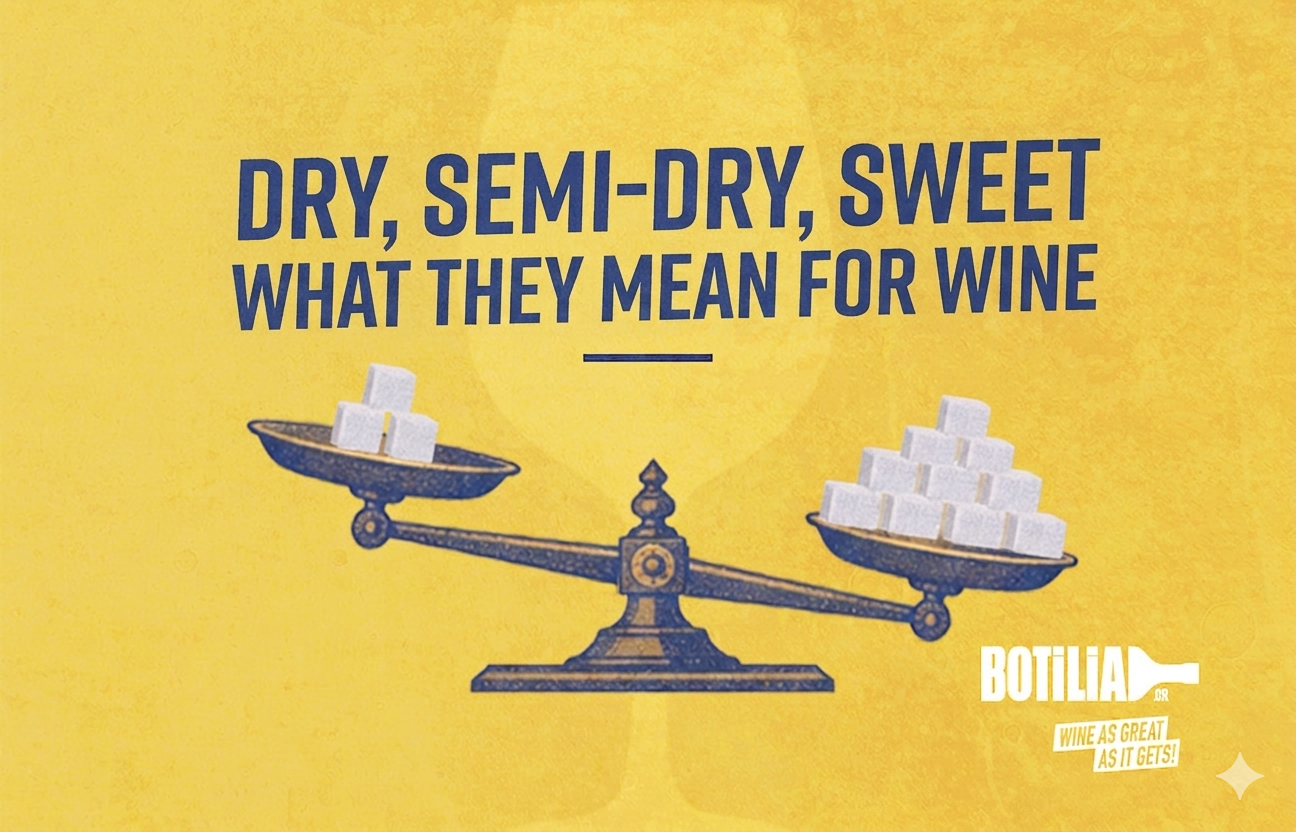
Sweetness in wine is an element that can easily be misunderstood and confuse consumers, creating the wrong impression about its quality and the level of “seriousness” with which they classify it. However, everything comes down to a delicate balance between grape cultivation, the winemaking method, and, of course, chemistry!
Why is a wine sweet and what lies behind it?
Let’s start from the beginning. To understand the differences between wine sweetness categories, you first need to understand where sweetness comes from.
Everything starts with the grape, which naturally contains sugars. During alcoholic fermentation, the key stage in transforming grapes into wine, the yeasts used “consume” these sugars and convert them into carbon dioxide and alcohol. And this is where things get interesting.
The stage at which fermentation stops, either naturally or artificially, determines the wine’s level of sweetness. Each winemaker can halt fermentation (through various methods), depending on the wine style they ultimately want to create, resulting in some of these sugars remaining in the final product. These sugars are called residual sugars, and depending on their quantity in the wine, the wine is classified into different categories.
How many categories are there?
You may now reasonably wonder: who decided these percentages, and based on whose tasting ability and judgment?
The answer is not the subjective opinion of a winemaker, but a combination of legislation and biology, which led to a global agreement based on residual sugar levels per liter of wine after fermentation.
As for still wines (sparkling wines follow slightly different rules), categories according to European legislation are structured as follows:
- Dry: residual sugars do not exceed 4 g/L, with most sugars having been converted into alcohol. On the palate, you perceive freshness and acidity, while fruit character dominates. Strong and classic examples include Santorini Assyrtiko, Chablis, Xinomavro, and traditional Bordeaux blends.
- Off-Dry: this category is ideal for those who find dry wines too “aggressive.” Fermentation stops shortly before completion, leaving residual sugars between 4–12 g/L. These wines leave an elegant and subtle sweetness on the palate, balance high acidity, and add more body to the wine. Examples include Oreivatis Rosé from Akriviotis Estate, Queen Rose from Domaine Michaelidi, Dr. L Riesling Demi-Sec by Ernst Loosen, while masterpieces of winemaking balance include Riesling Weil Kabinett 2024 from Weingut Robert Weil and Coulée de Serrant Sec 2022 from Vignobles de la Coulée de Serrant.
- Medium-Sweet: this category includes wines where residual sugar presence is now clearly noticeable, without being dominant. Sugar levels range between 12–45 g/L, giving the wine a fuller mouthfeel. A characteristic example is Treis Magisses from Barafakas Estate.
- Sweet: refers to wines containing 45 g/L residual sugar or more. Here, the character is richer and more opulent, both in taste and aromas of ripe fruit and nuts, as well as in texture. Some of the world’s most historic and expensive wines belong to this category, such as Château d’Yquem. Characteristic sweet wine examples include Riesling Auslese Wittmann and Amauta Torrontes Dulce from Bodega El Porvenir de Cafayate, while Vinsanto wines from Argyros Estate represent the pinnacle of tradition and mastery in sweet wine production.
The trap
The biggest trap that may mislead you when choosing wine based on sweetness is confusing aroma with taste.
For example, if you smell overripe peach or ripe strawberry aromas, you may immediately assume the taste will also be sweet. In wine, however, this is not absolute and can lead to entirely different conclusions, because a very dry wine can simultaneously be intensely fruity.
And the illusions!
Although the above categorization is accurate and very helpful when selecting wine, sweetness perception is not only a matter of residual sugar grams but also the combination of the wine’s other elements.
For example:
- High acidity softens sweetness, meaning an off-dry wine with high acidity may taste drier and fresher.
- Similarly, a wine aged in oak barrels enhances sweet aromatic characteristics on both the nose and palate, creating the impression of a sweeter wine (!)
- Then come tannins, which dry the mouth and reduce sweetness perception even further.
All of this ultimately brings you back to the conclusion that wine is all about balance and harmony.
How to pair sweetness with food
Choosing the right wine sweetness level can elevate a dish — or ruin it.
For safer choices, follow the pairing guide below!
|
Food |
Wine Category |
Why It Pairs Well |
|
Fish, seafood, sushi |
Dry |
The acidity and lack of sugar cleanse the palate |
|
Spicy Asian dishes |
Off Dry |
The residual sugars help soften the heat of the spices |
|
Sweet and sour dishes |
Semi Sweet |
Creates balance |
|
Blue cheeses |
Sweet |
The saltiness and richness balance the sweet element |
|
Pâté |
Sweet |
Rich, indulgent food requires the structure and body of a sweet wine |
|
Chocolate desserts |
Sweet |
An equally sweet wine prevents it from tasting bitter alongside chocolate |
Christina Tsogka
Wine Specialist