


PALE VS DEEP COLOURED WINES
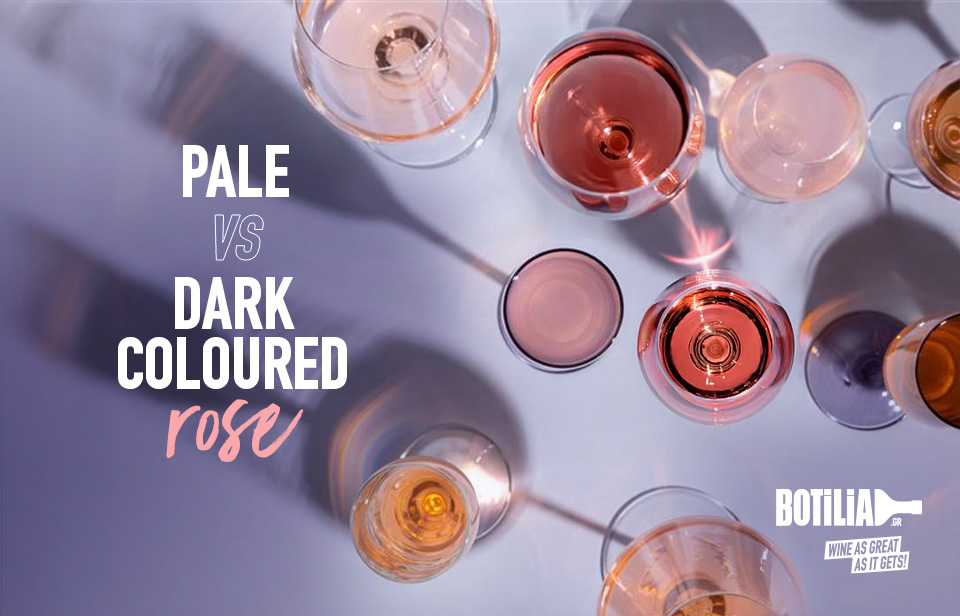
If we sit at a table with a glass of wine, the first thing I’ll tell you is that the color of rosé wine is the biggest ‘trap’ of the decade. After countless hours spent in tastings and (mainly) after opening many bottles of both pale and dark rosés, I’ve come to one conclusion: people choose rosé with their eyes, but they always enjoy it with their palate! So let’s step outside the boxes and look at rosé wines more holistically.
Rosé is no longer the ‘poor relative’ between white and red. It’s an entire palette, from onion-skin hues to deep ruby. From the ‘transparent’ wines of the French Riviera to the robust, deeply colored wines of Italy and Greece, the range is enormous, and rosé wines offer remarkable complexity and great gastronomic versatility.
It’s important to clarify from the start that the color of a rosé wine is not an indicator of quality. The shade (from pale salmon to vibrant cherry) reflects the winemaking technique, the grape variety, and the style the producer aims for ultimately, it’s a matter of personal preference.
Where the pink color comes from
The juice of most grapes is almost colorless and only gains color when it comes into contact with the skins. The pink hue comes from anthocyanins, the pigments found in the skins of red grapes. Unlike red wines, where the juice remains in contact with the skins for several days, in rosé wines this contact (maceration) is very brief from a few minutes to a few hours. The longer the maceration, the deeper the color. Of course, it also depends on how intensely pigmented the grape variety is.
How rosé wines are made
Generally, pale and darker rosés are made in the same way. The grapes are harvested slightly earlier than those destined for red wines, and fermentation usually takes place in stainless steel tanks at low temperatures to preserve the delicate aromas. In recent years, some rosés also spend time in barrels, gaining extra complexity. Another factor is that rosé wines are typically bottled immediately after fermentation, but when they remain in contact with the lees, they gain additional complexity and a distinctive character.
Pale rosés and the Provence Revolution
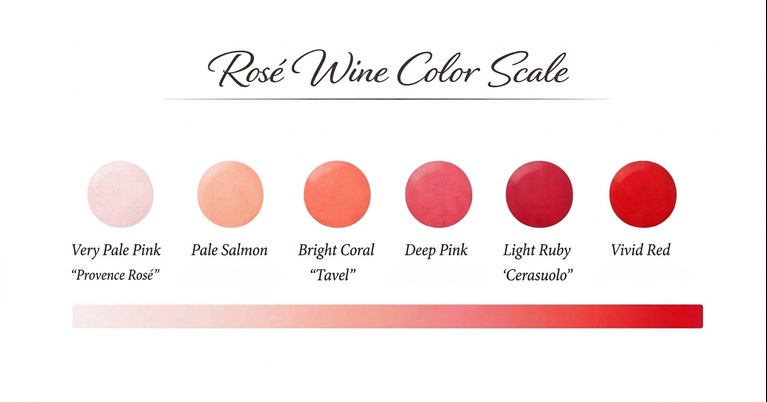
This category includes what I like to call ‘powdery’ rosés from very pale ones that resemble white wine, to onion-skin hues, to soft salmon tones. These are the so‑called Provence‑style wines, representing the golden age of rosé, turning it into a lifestyle drink. To such an extent that people began distinguishing between ‘Provence rosé’ and ‘all other rosés,’ with a wide audience drinking only perfectly pale wines.
This movement began in Provence, led by Sacha Lichine, owner of Château d’Esclans and creator of the famous Whispering Angel. In 2006, Sacha acquired the winery with the goal of producing the best rosés in the world and launching a ‘rosé revolution,’ shifting the style from almost oxidized, tannic, tiring rosés to lighter, easy‑drinking ones. He achieved this through new techniques (low temperatures, high‑tech presses) and by reducing skin contact time, resulting in a very pale pink color.
These wines typically show aromas of strawberry, peach, pink grapefruit, and rose petals, with light body and high acidity. The usual grape varieties are blends of Grenache, Cinsault, Syrah, and Mourvèdre. They became synonymous with summers on the Côte d’Azur, yachts, turquoise waters, luxury wines enjoyed on their own as an apéritif or with light dishes, from salads and Mediterranean cuisine to shellfish. They are also not wines you keep for long, as they generally lack aging potential.
Languedoc followed as the next trendsetter, initially imitating Provence but now producing premium rosés with its own identity. The Greek equivalent is Idylle d’Achinos, a perfect example of this style in Greece, along with Mountcloud Navitas Winery and of course Tomi from Troupis Winery, with its elegant strawberry and cherry aromas.
The deeper pink and rose‑petal rosés
In the category of rosés with more structure, we remain in Provence but move south to Bandol, where the color is still salmon but noticeably darker. Here, the dominant Mourvèdre grape gives Bandol rosé a more robust character, setting it apart from the rest of Provence. It’s the ‘pale’ rosé that behaves like a ‘dark’ one, with incredible structure even after five years sometimes even better with age! It pairs beautifully with meat dishes, beef carpaccio, fish soups like kakavia, or fish such as tuna and salmon.
Nearby in the Rhône Valley, we find Tavel the only AOC in the Southern Rhône that produces exclusively rosé wines. Tavel is known for its deep pink‑coral wines made from Grenache Rouge and Syrah. With aromas of ripe strawberry and raspberry, it’s one of the few rosés that can easily age for three years, evolving into a style reminiscent of a light red meant to be enjoyed slightly chilled. Its complexity stands up to bold flavors think charcuterie pizzas or grilled lamb chops.
In the darker rosé category we also find Cerasuolo d’Abruzzo from Central Italy. The most hardcore Italian rosé, made from Montepulciano, literally means ‘cherry‑colored’ (from ciliegia). It bursts with sour cherry and cherry aromas and has exactly that deep, bright cherry or ruby color, even with minimal skin contact. It has its own DOC, separate from Montepulciano d’Abruzzo red, and has the most tannic structure of all the above. It’s one of the few rosés that doesn’t need to be consumed within the first year. A true gastronomic chameleon pair it with richer, fattier dishes like eggplant, ragù, moussaka, meatballs, or even tuna tataki.
In the same dark‑rosé category, Greece also shines with impressive wines from Xinomavro and Agiorgitiko. Xinomavro rosés, due to the nature of the variety, offer incredible tension, high acidity, and tannic character, with aromas of tomato and strawberry the epitome of gastronomic rosé. Try Xinomavro Rosé Zinideos, Xinomavro Rosé Demi Sec from Tasiona Winery, or Moschopolis 8. They age beautifully, and you’ll even find them in dark bottles, like the 2023 Oenos Nature Xinomavro Rosé, indicating long aging potential.
If you want a darker rosé that’s fruitier and more playful, go for an Agiorgitiko rosé, such as Agiorgitiko Rosé 2023 from Papaioannou Estate. These wines offer cherry, sour cherry, and sweet strawberry aromas, with a rounder mouthfeel and lower acidity than Xinomavro, making them velvety and easy to pair with tomato‑based dishes like shrimp saganaki, octopus with short pasta, or spicy dishes where the fruitiness softens the heat.
Feeling confused? I hope not the options are many, and they certainly debunk the myth that color determines the quality of rosé wine. A good tasting order would be: start with a Provence rosé, continue with a Moschofilero and a Languedoc, then move to a Bandol, an Agiorgitiko, a Tavel, a Cerasuolo, and finally a Xinomavro.
But these are just guidelines after all, our job is to learn the rules, but the best judge is always your palate!
Christina Tsogka
Wine Specialist