


TEQUILA CLASE AZUL: A TASTE OF TRADITION, LUXURY AND MEXICAN HERITAGE!
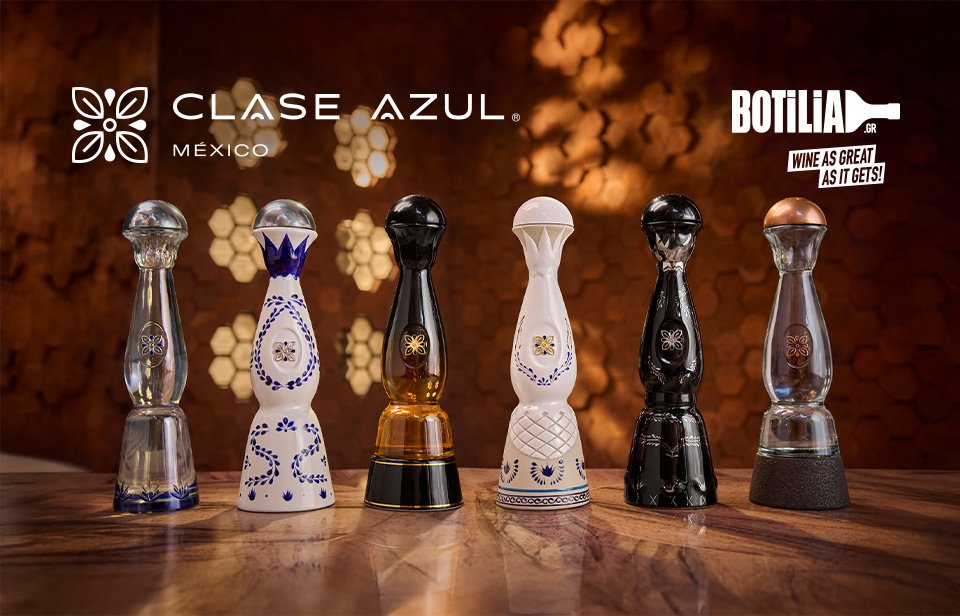
It’s fascinating how certain products manage to transcend the contents of the bottle and become cultural symbols. The story of Clase Azul is one such shining example — a true ‘miracle’ of modern distillation.
If you’ve walked through the vineyards of Vosne-Romanée and lost yourself in vertical tastings in the underground cellars of Bordeaux, you learn to instantly recognize the weight of a bottle’s heritage. Unfortunately, I haven’t, but I can certainly understand how, just like a rare Grand Cru demands time, patience, and deep respect for the land, Clase Azul carries the soul of Mexico, transforming blue agave into a canvas that even the great Renaissance masters would envy.
After all, if you’re a collector, you know very well that with every bottle of your favorite wine, you’re not just buying the liquid inside you’re buying the story, the place, the person behind it.
But let’s start from the beginning…
The Humble Beginning, when Clase Azul was just “another one”
The story of Clase Azul doesn’t begin in a high-tech lab, but in a small bar in Guadalajara. There, in 1997, 23-year-old bar owner Arturo Lomeli decided to change the way people viewed tequila as the drink for “quick shots” and transform it into a cultural artifact. His first attempt didn’t go very well; despite its affordable price and a very ordinary bottle (topped with a sombrero cap), the market completely ignored it.
Arturo didn’t give up. With admirable persistence, he went back to school and earned a master’s degree in luxury marketing. There he realized that behind tequila lies an entire culture, and he set out to discover exactly what it would take to create a brand with a soul something akin to the aura of heritage you encounter in a great vineyard or a historic Château.
The destruction of the old model was inevitable, and the creation of an Ultra Premium tequila that would be treated with the same respect the French give Cognac or the Scots give Single Malt became his new vision.
The Evolution and the Birth of a Symbol
The major shift came when all attention turned to the quality of the agave and the craftsmanship of the ceramic. Lomeli understood that the packaging must always be worthy of the contents and reflect the symbol of luxury he wanted to create. So he combined several techniques that elevated both the quality and the reputation of the brand.
Since then and to this day, Clase Azul uses the famous Blue Weber Agave, grown in one of the highest regions of Jalisco, in Los Altos. There, the plant grows for 6 to 8 years, absorbing all the trace elements of the red volcanic soil that make it unique and instantly recognizable.
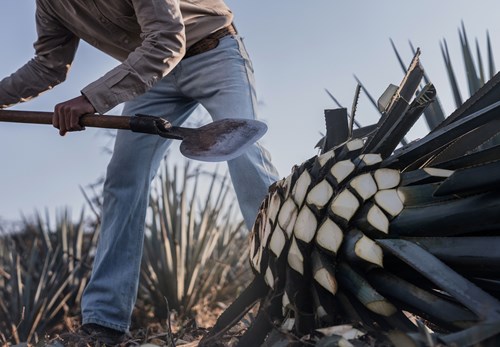
Next comes the use of traditional stone ovens (hornos) instead of industrial ones, and the slow cooking of the agave for 72 hours, giving the tequila its characteristic sweet, caramelized agave flavor that has made it world-famous.
And last, but certainly not least, is the magical decanter. This is where the mastery lies, not only of Lomeli but of the entire community’s philosophy. In the small village of Santa Maria Canchesda, the Tradición Mazahua workshop was founded, where hundreds of Mexican artisans many from the Mazahua community work daily to create the iconic ceramic bottles. Each one takes two weeks to complete, hand-painted, ultimately becoming a unique work of art.
This was the element that opened the door to global fame. The white ceramic bottle adorned with the signature blue feathers of Clase Azul Reposado became its passport to the world’s most exclusive bars.
What the Experts Say
In the art world, Clase Azul has long captured the attention of major collectors. Critics no longer compare it to other tequilas but to works of art. Mexican artist Amador Montes, who recently collaborated with Clase Azul Encuentros, describes it as “a living archive of Mexican creativity,” while renowned artist and designer Gerardo Reinoso notes that “the Clase Azul bottle bridges Mexico’s past with the future of global design.”
On the other hand, strict spirits critics bow to the quality of the liquid itself. The Beverage Testing Institute and the San Francisco World Spirits Competition have awarded Clase Azul Reposado with gold medals, while the critics at Master of Malt describe its flavor as “a symphony of roasted agave, vanilla, and caramel with a soft oak finish.”
And of course, the characteristic phrase: “It’s a tequila meant to be sipped slowly, like a very expensive aged wine.”
Its Establishment as a Luxury Brand
Today, Clase Azul defines itself as a Luxury House. This was reinforced by several collectible editions, such as Clase Azul Ultra (aged for 5 years and featuring platinum and 24-karat gold details), as well as initiatives that set it apart socially. Through the Fundación con Causa Azul, the brand actively supports Mexican artisans, ensuring that traditional craftsmanship is preserved. Finally, with Clase Azul Destinations which includes a boutique hotel, restaurants in Los Cabos, and an exclusive tasting room in San José del Cabo the brand now offers a once-in-a-lifetime experience.
Tips for Savvies
The Ritual Bell: The ceramic stopper of Clase Azul Reposado resembles a bell intentionally. If you tap it gently with your finger, it produces a crystal-clear sound. Among brand enthusiasts, whoever rings the bell serves the next round.
The Symbols on the Decanter: Every brushstroke on the Clase Azul Añejo bottle (the “feathered design”) tells a story. The spirals at the base represent the fertility of the earth. The thin blue line symbolizes the water that gives life to the agave. The central four-petaled flower represents the sun, according to indigenous cosmology, essential for the plant’s sugar concentration.
The Secret of the Gold: Clase Azul Gold is a rare blend that unites three worlds: the bold Clase Azul Plata, a special Reposado aged in French oak, and an Extra Añejo rested in Sherry (Pedro Ximénez) casks. Its base is adorned with two hand-painted 24-karat gold ribbons.
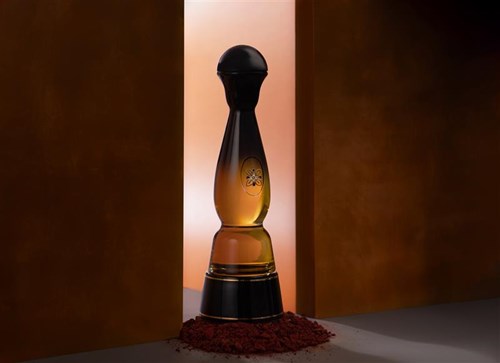
The most recent addition is Clase Azul Blanco Ahumado, an elegantly smoked tequila that derives its aromas from the slow roasting of agave in an underground oven lined with wood and volcanic stones.

The Double Life of the Decanter: Clase Azul collaborates with the Istituto Europeo di Design in Milan to transform the decanters into lamps, vases, even table bases.
The Secret Yeast: While many tequilas use commercial yeasts, Clase Azul uses its own patented yeast strain impossible for competitors to replicate.
Positioning on the Global Luxury Map
So you understand that if you thought you’d find it in classic restaurants and bars around the world, you were gravely mistaken. Forget tourist hotspots. Clase Azul has strategically positioned itself exclusively in places where the heart of the global elite beats. Simply put: if a venue has five stars, requires reservations three months in advance, has a dress code, and someone at the door telling you “sorry, you’re not on the list,” Clase Azul is already inside waiting for you.
Some of these places include Casa de los Leones, a historic mansion transformed into a temple of Mexican design and hospitality; La Terraza, one of the most exclusive spots in Baja California, where gastronomy follows the agave ritual with reverence; and top-tier hotels, restaurants, and bars in Dubai, Saint-Tropez, and private clubs in London and New York.
Fortunately for you, you’ll also find it at botilia.gr 😉
Christina Tsogka
Wine Specialist